

Post-concussion Screen Time: Amount and Type Matter for Recovery
Post-concussion Screen Time: Amount and Type Matter for Recovery 1024 661 Laura Dattner

A new study found that moderate screen time may speed recovery in youth with concussion. In a study published in British Journal of Sports Medicine, researchers found that about 141 minutes of screen time each day for the first three days following concussion was associated…

read more
Decorative gold bar and circles on a white background
A New Therapeutic Era for Sickle Cell Disease
A New Therapeutic Era for Sickle Cell Disease 1024 320 Katie Brind'Amour, PhD, MS, CHES

Transformative therapies, coupled with novel approaches to supportive care, provide increasing hope for a normal life. For more than 100 years, progress in sickle cell disease (SCD) treatment has been slow. Its mainstay treatment, hydroxyurea, approved about 30 years ago, is a repurposed cancer…

read more
King Robinson - a young patient at Nationwide Children's - smiling and standing next to a window inside the hospital
Therapy Fit for a King
Therapy Fit for a King 1024 588 Katie Brind'Amour, PhD, MS, CHES

Marsha Marshall decided to raise King Robinson when he was just a baby at the request of his mother, Tameka Robinson, who was suffering from complications of sickle cell disease. It wasn’t long before King was diagnosed as well. For a woman in her…

read more
A girl in a bright pink shirt smiles while sitting beside a large hospital window and looking outside.
Turning Evidence Into Advocacy
Turning Evidence Into Advocacy 1024 574 Abbie Miller

The healthcare community is increasingly recognizing their role in shaping policy, leveraging front-line experience, injury data and research. In June 2024, 11-year-old Avery Russell was playing at a friend’s house when she was viciously attacked by two dogs. What happened that day changed her…

read more
Stronger Together: The Unique Power of the Ohio Children’s Hospital Association
Stronger Together: The Unique Power of the Ohio Children’s Hospital Association 595 212 Abbie Miller

The Ohio Children’s Hospital Association (OCHA) was formed 40 years ago when the CEOs of Ohio’s six children’s hospitals got together to address a new methodology for reimbursement that did not take into consideration pediatric conditions and acuity. “Ohio’s children’s hospitals are safety net…

read more
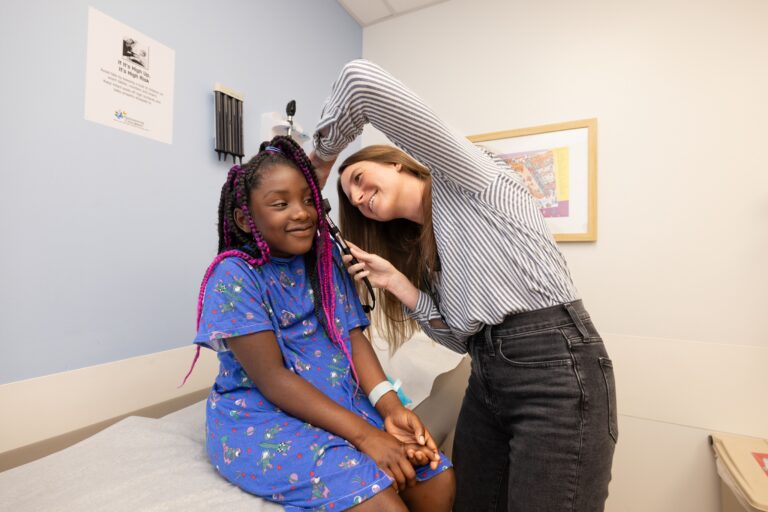
A smiling girl sits on a table at a doctor's office. A smiling female doctor is checking the girl's ear.
A Blueprint for Better Care: The Constant Drive for Quality Improvement in Primary Care
A Blueprint for Better Care: The Constant Drive for Quality Improvement in Primary Care 1024 683 Alaina London

A culture of quality improvement at Nationwide Children’s Hospital has become the model of care for children across the country. Every day, thousands of children walk through the doors of Nationwide Children’s Primary Care Centers for well visits, follow-up care, acute illness and so…

read more
Beyond the Clinic: Bipolar Disorder Care Where Kids Live, Learn and Grow
Beyond the Clinic: Bipolar Disorder Care Where Kids Live, Learn and Grow 1024 320 Madison Storm

For many children and adolescents with bipolar disorder, care begins in a crisis: severe mood symptoms, suicidality or hospitalization. They are evaluated in an emergency department or admitted for inpatient care. Stabilization is an immediate priority. But what happens next? A new state-of-the-field review…

read more
teenage patient and doctor talking in an exam room
Iron Deficiency Begins Before Anemia
Iron Deficiency Begins Before Anemia 1024 683 Amanda E. Jacobson-Kelly, MD, MSc

Why Pediatricians Should Recognize and Treat Iron Deficiency Before Anemia Develops For generations, pediatricians have been taught to think about iron deficiency in the context of anemia. We routinely screen infants for anemia and, when hemoglobin is low, diagnose and treat iron deficiency. If…

read more
Doctor in a white coat holding a clipboard pad and fill medical history list with silver pen.
Delays and Disparities in Uptake of Effective Antiseizure Medications
Delays and Disparities in Uptake of Effective Antiseizure Medications 1024 562 Katie Brind'Amour, PhD, MS, CHES

National prescribing trends suggest many children may receive suboptimal epilepsy therapy. In the wake of landmark trials (SANAD II) firmly supporting the use of lamotrigine for focal and valproate for generalized epilepsy, neurologists at Nationwide Children’s expected these drugs would be increasingly prescribed. Instead,…

read more
Newborn baby in an incubator at the NICU
Evaluating Adherence and Safety Outcomes for Neonatal UTI Diagnosis and Treatment
Evaluating Adherence and Safety Outcomes for Neonatal UTI Diagnosis and Treatment 1024 683 JoAnna Pendergrass, DVM

Neonates are at increased risk for developing urinary tract infections, yet a knowledge gap exists regarding defining, diagnosing and treating them in the NICU. A study across seven Nationwide Children’s neonatal intensive care units (NICUs) reported 80% adherence to diagnostic criteria for urinary tract…

read more
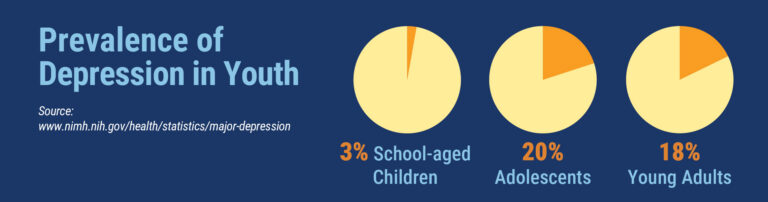
Graphic is titled Prevalence of Depression in Youth. It shows 3 pie graphs depicting 3% School-aged Children, 20% Adolescents, and 18% Young Adults
Depression Medication Adherence Varies Among Medicaid Youth
Depression Medication Adherence Varies Among Medicaid Youth 1024 270 Lynn Dosky

Poor medication adherence increases risk of persistent depression, suicide and self-harm. A national study of nearly 200,000 Medicaid- enrolled youth ages 9 to 24 found major gaps in the quality of antidepressant treatment and adherence for a new major depressive episode. Researchers analyzed Medicaid…

read more
Woman is spoon feeding a toddler
Better Transitions From NG Tube to Oral Feeding
Better Transitions From NG Tube to Oral Feeding 1024 683 Lauren Dembeck

An intensive program helped 76% of children with nasogastric tubes transition to oral feeding, avoiding gastrostomy tube placement. Some children with pediatric feeding disorder who require prolonged nasogastric tube (NG tube) feeding may be able to avoid gastrostomy tube (G-tube) placement through intensive multidisciplinary…

read more
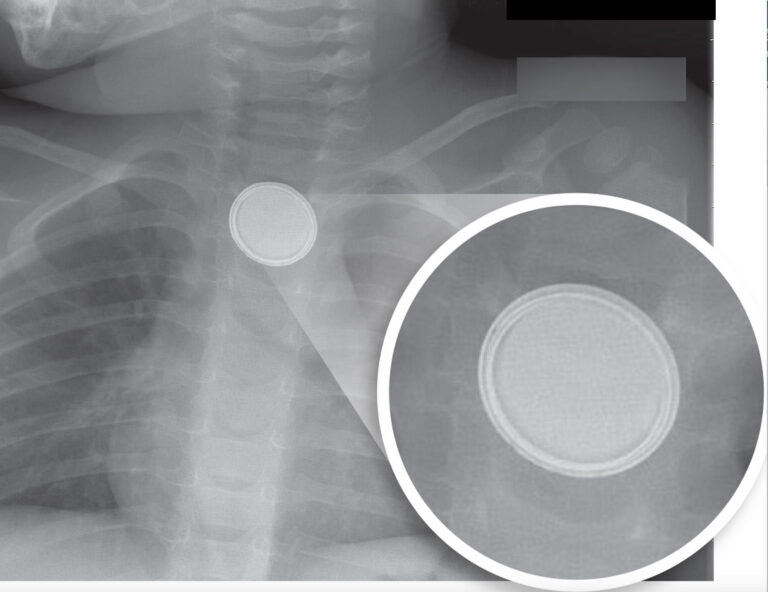
X-ray image showing a button battery lodged in a child's throat, with a callout showing a close up of the battery, highlighting the double ring around it
Evaluation of New-to-Market Coin-Cell Battery and Medical Management Recommendations
Evaluation of New-to-Market Coin-Cell Battery and Medical Management Recommendations 1024 790 Abbie Miller

First peer-reviewed evaluation of a commercially available esophageal-protective lithium coin-cell battery demonstrates substantially reduced tissue injury, but researchers emphasize that current emergency medical management should remain unchanged. When a lithium coin-cell battery becomes lodged in a child’s esophagus, severe tissue injury can develop rapidly.…

read more
New Classification System Links Wound Complications to Cancer Treatment Delays in Pediatric Bone Sarcomas
New Classification System Links Wound Complications to Cancer Treatment Delays in Pediatric Bone Sarcomas 150 150 Pam Georgiana

Study identifies patients at highest risk and provides a framework for earlier multidisciplinary intervention. Children with osteosarcoma and Ewing sarcoma, the two most common pediatric bone sarcomas, typically start treatment before tumor resection, then promptly resume chemotherapy or their clinical trial protocol after surgery.…

read more
Featured Researcher – Beth Kozel, MD, PhD
Featured Researcher – Beth Kozel, MD, PhD 150 150 Gina Vitale, PTA

Genomic medicine is a revolutionary chapter within science, evolving at an exponential rate. At Nationwide Children’s, the Steve and Cindy Rasmussen Institute of Genomic Medicine brings the rapidly advancing science to the clinic to improve diagnosis, therapies and outcomes for children with gene-based conditions.…

read more
Dr. Kallash standing in an office hallway, wearing a white coat and red tie.
Renal Artery Stenosis Perspectives: A Conversation With Nephrologist Mahmoud Kallash, MD
Renal Artery Stenosis Perspectives: A Conversation With Nephrologist Mahmoud Kallash, MD 1024 683 Gina Vitale, PTA

Mahmoud Kallash, MD, is a glomerular disease expert, the director of the Comprehensive Hypertension Program at Nationwide Children’s Hospital, a principal investigator and an associate professor in pediatrics at The Ohio State University College of Medicine. Here, Dr. Kallash discusses current treatment obstacles, ongoing…

read more
physicians in white coats looking at a tablet
Rumination Syndrome May Be Underrecognized in Children With Eosinophilic Esophagitis
Rumination Syndrome May Be Underrecognized in Children With Eosinophilic Esophagitis 1024 683 Madison Storm

New research highlights the importance of considering co-diagnoses in children with persistent regurgitation. Regurgitation is a common symptom in both eosinophilic esophagitis (EoE) and rumination syndrome (RS), but new research suggests the overlap between the two conditions may be greater than previously recognized. The…

read more
Study Reveals Challenges in Cardiac Transplantation Referrals for High-Risk Infants
Study Reveals Challenges in Cardiac Transplantation Referrals for High-Risk Infants 1024 670 JoAnna Pendergrass, DVM

Findings from a recent retrospective study demonstrate challenges and inequities in cardiac transplantation referrals for infants with single ventricle congenital heart disease, suggesting the need to improve access to transplantation and the timing and rate of transplantation referral.   A retrospective study led by…

read more
Dr. DaJusta, urologist, standing in a hospital hallway smiling.
Robotic Pyeloplasty Is a Viable Option for Infants Younger Than 6 Months
Robotic Pyeloplasty Is a Viable Option for Infants Younger Than 6 Months 1024 677 Lauren Dembeck

A Nationwide Children’s study found comparable outcomes with robotic and open pyeloplasty in infants younger than 6 months, suggesting patient size alone should not preclude a robotic approach.   Robotic pyeloplasty appears to be a viable alternative to open surgery even in infants younger…

read more
Molly Fuchs, MD, chief of Urology at Nationwide Children's, wearing scrubs and a white coat standing in a hospital hallway.
Early Vesicostomy May Help Predict Long-Term Urinary Outcomes in Girls With Cloacal Malformation
Early Vesicostomy May Help Predict Long-Term Urinary Outcomes in Girls With Cloacal Malformation 1024 611 Lauren Dembeck

The need for vesicostomy in infancy may help identify girls with cloacal malformation who are at greater risk for impaired bladder function, chronic kidney disease, and future reconstructive surgery.   Girls born with cloacal malformation who require a vesicostomy in infancy may be less…

read more